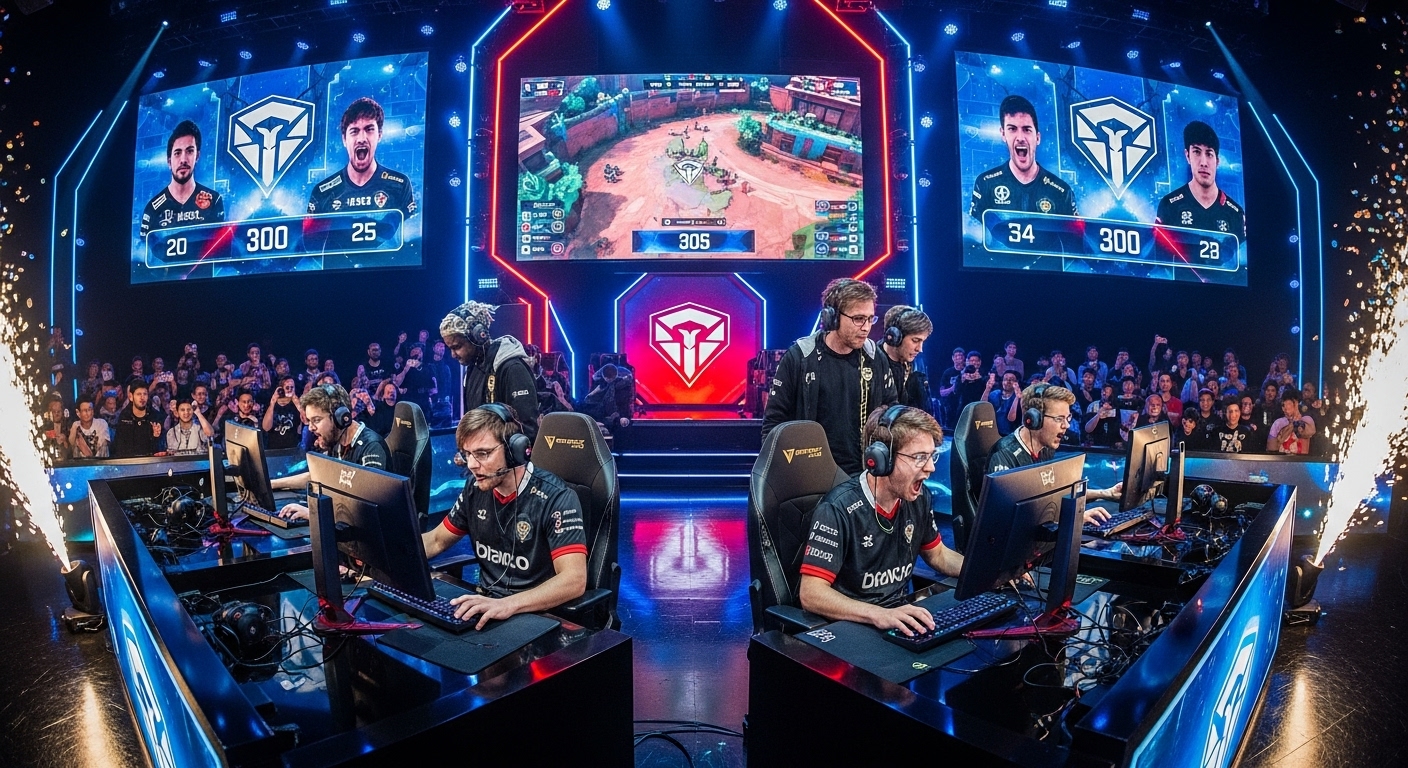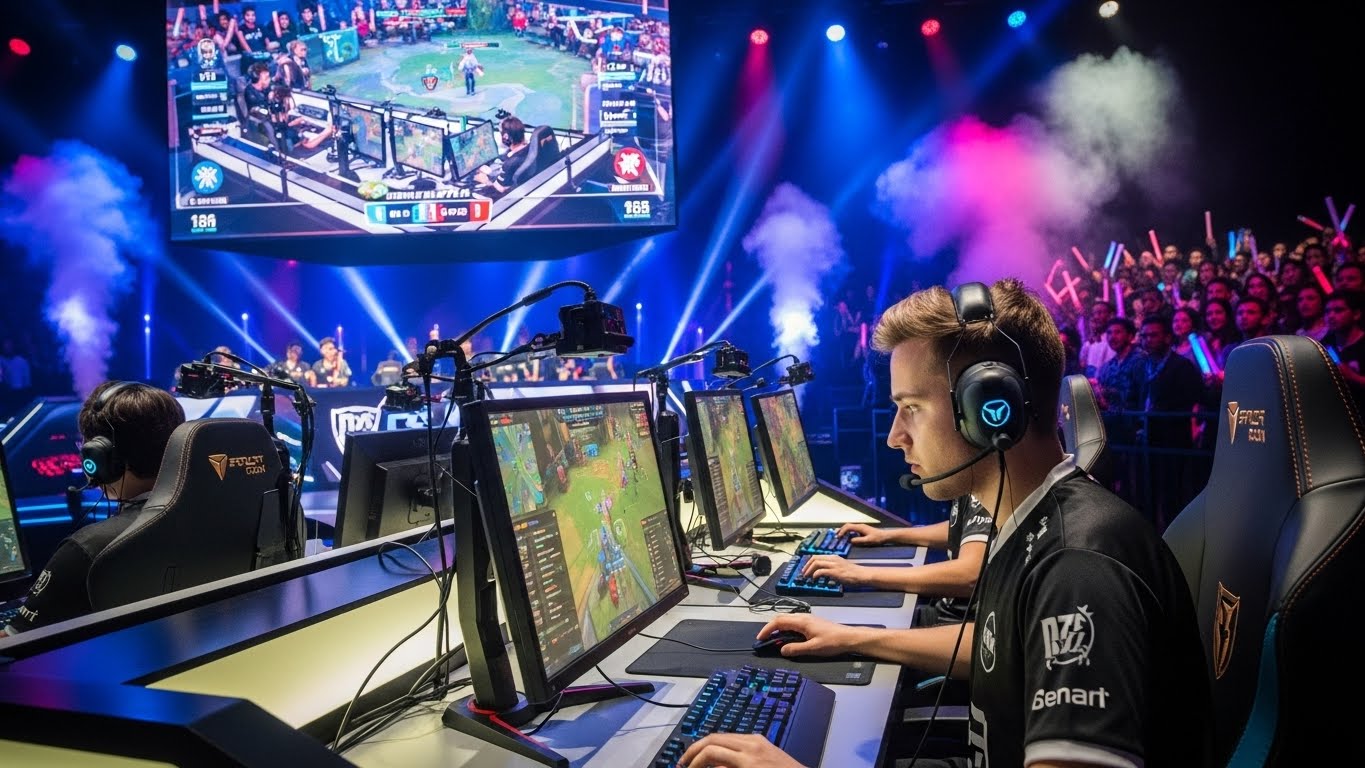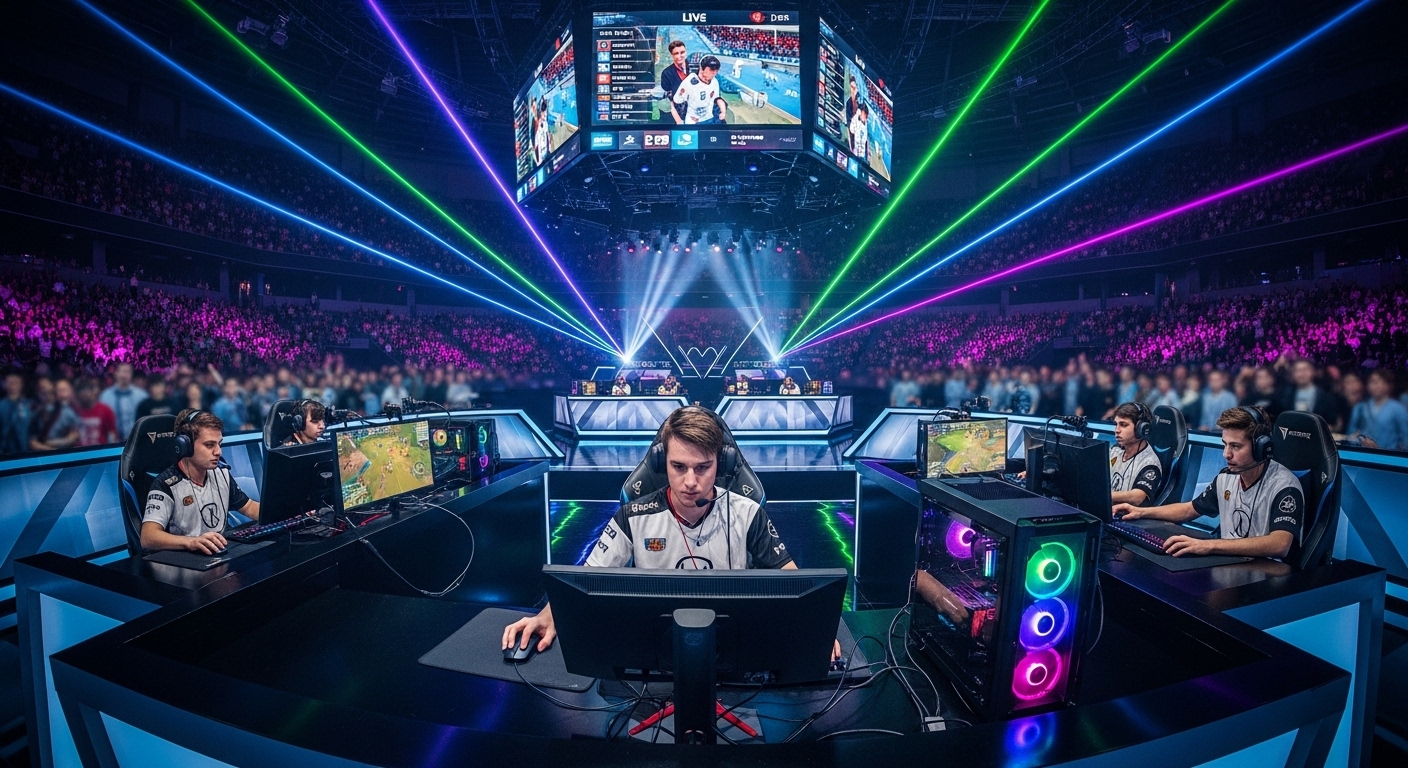





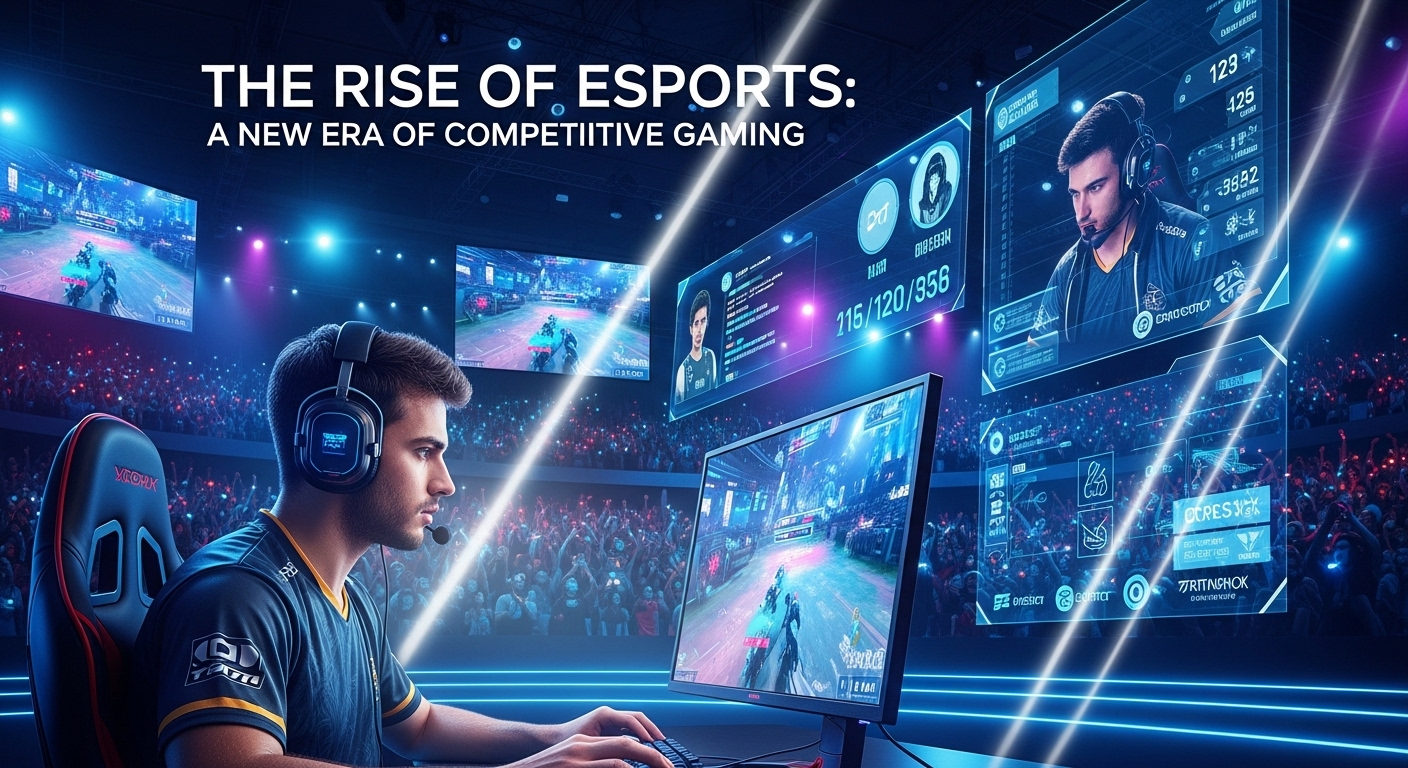
Esports, short for electronic sports, has transformed from a small underground hobby into a global entertainment powerhouse. Once dismissed as a pastime for gamers, it now rivals traditional sports in audience size, sponsorship deals, and cultural influence. The world of competitive gaming is no longer just about fun; it’s a legitimate industry worth billions of dollars, employing thousands of people across the globe. The rise of Esports represents one of the most significant shifts in modern entertainment, reflecting how technology, competition, and community have merged to create a new digital arena.
The Origins of Competitive Gaming
The roots of Esports can be traced back to the earliest days of video games. The first known gaming competition took place in 1972 at Stanford University, where students competed in the game Spacewar! for a prize of a year’s subscription to a magazine. While small and casual by modern standards, it planted the seeds of competitive gaming culture. During the 1980s, arcade games like Pac-Man, Donkey Kong, and Space Invaders sparked a growing interest in achieving high scores and outperforming others.
In 1980, Atari hosted the Space Invaders Championship, which attracted over ten thousand participants across the United States. It was one of the first major gaming tournaments, marking the beginning of Esports as a public spectacle. The idea that gaming could be competitive, organized, and social took root. Yet, without the internet or live broadcasting, these competitions remained local and small-scale. The dream of professional gaming was still years away from becoming a reality.
The Internet Revolution and the Birth of Modern Esports
The 1990s ushered in a technological revolution that changed everything. With the rise of home computers, local area networks, and eventually the internet, gamers could now compete beyond their living rooms. Games like Doom, Quake, and StarCraft became central to the first generation of online competitive play.
South Korea played a particularly crucial role in shaping the Esports ecosystem. Following the Asian financial crisis in the late 1990s, the South Korean government invested heavily in internet infrastructure. The result was a nation equipped with fast broadband, leading to the rise of PC bangs—gaming cafés that became social hubs for competitive gaming. It was in this environment that StarCraft, Blizzard Entertainment’s real-time strategy game, became a national obsession. Televised matches, professional teams, and sponsorships turned Korean gamers into celebrities. This period is widely regarded as the birth of Esports as we know it.
The Expansion of Competitive Titles
As technology evolved, so did the games that defined competitive play. In the early 2000s, titles like Counter-Strike, Warcraft III, and Halo became central to tournaments around the world. The growth of first-person shooters, real-time strategy games, and fighting games diversified the competitive scene. Each genre built its own communities and heroes.
Counter-Strike helped establish the foundation for team-based shooters, where strategy, reflexes, and communication determined victory. Meanwhile, Warcraft III gave rise to new gaming mechanics that would later influence other genres, including the birth of the Multiplayer Online Battle Arena (MOBA). From Warcraft III’s modding scene came Defense of the Ancients, better known as DotA, which would eventually evolve into Dota 2 and inspire League of Legends.
Fighting games such as Street Fighter, Tekken, and Super Smash Bros. also cultivated their own vibrant Esports communities. These games, often played in local tournaments and arcade halls, emphasized one-on-one skill, reaction time, and reading an opponent’s mind. Each of these competitive categories helped define the early Esports ecosystem, proving that gaming was not only a form of entertainment but also a platform for mastery and competition.
The Rise of Streaming and Online Platforms
The 2010s were a turning point for Esports. What truly catapulted the industry into the mainstream was the rise of live streaming platforms, particularly Twitch. For the first time, fans could watch tournaments and professional gamers live from anywhere in the world. This democratized access to gaming content, allowing players to connect directly with audiences without the need for traditional television or large-scale broadcasting infrastructure.
Streaming turned gamers into entertainers, influencers, and athletes in their own right. Viewers could interact in real-time, creating a unique and personal bond between players and fans. The Esports audience exploded as millions tuned in to watch their favorite teams, streamers, and competitions. Major tournaments like The International for Dota 2, the League of Legends World Championship, and the Fortnite World Cup began attracting millions of concurrent viewers and record-breaking prize pools.
At the same time, YouTube and social media platforms played a vital role in amplifying Esports content. Match highlights, player interviews, and analytical breakdowns created a new culture of engagement. Gaming was no longer a solitary experience; it was a shared global spectacle.
The Professionalization of Esports
As viewership numbers soared, Esports began to attract serious investment. Sponsors, advertisers, and traditional sports organizations recognized its potential. Major brands ranging from energy drinks to tech companies poured money into Esports teams and events. Tournament organizers refined production quality, incorporating high-definition visuals, commentary teams, and cinematic storytelling that rivaled traditional sports broadcasts.
Professional organizations formed around games, developing structured leagues and seasons. Games like League of Legends introduced the League Championship Series (LCS) in North America, with franchised teams, salaries, and official training facilities. Overwatch followed suit with the Overwatch League, modeled directly after traditional sports systems, complete with city-based teams and global tournaments.
Players became full-time professionals, earning salaries, sponsorship deals, and endorsements. They trained with coaches, analysts, and nutritionists, reflecting a growing recognition that Esports required physical and mental discipline. The transition from amateur to professional was no longer a dream—it was a career path. Universities began offering scholarships for Esports players, and specialized training programs emerged to support aspiring competitors.
Global Competitions and Cultural Influence
Today, Esports is a global phenomenon. Major tournaments fill arenas, attract millions of online viewers, and distribute multi-million-dollar prize pools. The League of Legends World Championship, for instance, draws viewership numbers comparable to the Super Bowl. The Dota 2 International consistently breaks records with its community-funded prize pools, often exceeding tens of millions of dollars. Games like Fortnite, Valorant, and PUBG have joined the ranks, each bringing its own audience and competitive style.
Beyond the competition itself, Esports has become a significant cultural movement. Its influence extends into fashion, music, and entertainment. Collaborations between gaming franchises and clothing brands have blurred the lines between gamer culture and streetwear. Music artists perform during tournament openings, and celebrities invest in Esports teams, recognizing the industry’s global appeal.
Esports is also redefining how younger generations consume media. Unlike traditional sports, where fans passively watch games, Esports offers an interactive experience. Viewers can chat with players, learn strategies, and even join the same games they watch. This participatory culture fosters a deeper sense of community and connection that traditional sports sometimes lack.
Challenges Facing the Esports Industry
Despite its meteoric rise, Esports faces significant challenges. One major issue is sustainability. The industry’s rapid growth has sometimes outpaced its financial stability. Many organizations struggle with profitability, relying heavily on sponsorships rather than consistent revenue streams. Unlike traditional sports, which generate income from ticket sales, broadcasting rights, and merchandise, Esports still grapples with finding a stable business model.
Player burnout is another growing concern. The intense training schedules, frequent travel, and constant pressure can take a toll on mental and physical health. Many professional players retire young, often before the age of 25. As the industry matures, there is increasing focus on player welfare, career longevity, and post-retirement opportunities.
Cheating and integrity are also critical challenges. As with any competitive field, Esports must combat cheating, match-fixing, and performance-enhancing software. Maintaining fair play and transparency is essential to preserving its legitimacy as a sport. Anti-cheat technologies and professional oversight have improved, but the fight against exploitation continues.
Additionally, the industry must confront issues of inclusivity and representation. While gaming is universal, Esports has often been criticized for its lack of diversity and toxic online behavior. Efforts are underway to promote inclusion and create safer, more welcoming environments for all players, regardless of gender or background.
The Role of Technology in Shaping the Future
Technology has always been at the heart of Esports, and its evolution continues to redefine what is possible. Advances in artificial intelligence, virtual reality, and augmented reality are poised to open new frontiers for competitive gaming. Imagine virtual arenas where players compete in immersive environments, or AI-driven analytics that refine strategies and enhance player performance.
Cloud gaming is another frontier. With platforms that allow high-quality gameplay without expensive hardware, Esports could become even more accessible. This democratization could expand the player base and viewership, allowing anyone with an internet connection to compete or spectate at high levels.
Furthermore, blockchain technology and digital collectibles are beginning to reshape how fans engage with their favorite teams. Collectible skins, NFTs, and digital assets linked to in-game achievements are creating new forms of fan ownership and participation. Whether these trends will endure remains uncertain, but they demonstrate the creativity and adaptability of the Esports ecosystem.
Education and Career Opportunities in Esports
As Esports continues to grow, educational institutions have started to recognize its value beyond entertainment. Universities now offer degrees and courses in Esports management, marketing, and production. This academic integration reflects the professional opportunities the industry presents. Careers in event organization, broadcasting, coaching, and content creation are flourishing.
Esports has also proven to be an effective educational tool. It encourages teamwork, problem-solving, communication, and leadership—skills that are transferable to many fields. Schools are incorporating gaming clubs and Esports programs to engage students who might not connect with traditional sports, giving them a sense of belonging and purpose.
The Blurring Line Between Traditional Sports and Esports
One of the most fascinating aspects of Esports’ rise is how it has begun to merge with traditional sports. Many professional athletes have invested in Esports organizations, recognizing the parallels between the two worlds. Sports teams like the Golden State Warriors, Paris Saint-Germain, and Manchester City have launched their own Esports divisions, bridging the gap between physical and digital competition.
Broadcast networks and sporting events are also integrating Esports. During the global pandemic, when physical sports were suspended, Esports filled the void. Virtual racing leagues, simulated tournaments, and digital competitions kept fans entertained and demonstrated the resilience of the gaming industry. This convergence of digital and physical sports has set the stage for a future where the two coexist symbiotically rather than in opposition.
The Global Community and Its Future
At its core, Esports is about community. It thrives on connection—between players, fans, developers, and organizers. Whether it’s local LAN tournaments or international championships, the sense of belonging that Esports creates is unmatched. Gaming transcends borders, languages, and cultures. It unites people through shared passion and competition.
The future of Esports appears bright. With younger generations growing up in a digital-first world, gaming will remain a central form of entertainment. The industry’s potential is immense, from technological innovation to educational development and global diplomacy. Esports could even play a role in bridging cultural divides, fostering collaboration, and promoting digital literacy.
However, its continued success will depend on how well it addresses its current challenges—ensuring sustainability, inclusivity, and integrity. The most successful Esports organizations of tomorrow will be those that not only entertain but also inspire, educate, and empower communities around the world.
Conclusion: The New Era of Competitive Entertainment
From a handful of enthusiasts at a university in 1972 to millions of fans filling arenas and streaming platforms today, the journey of Esports is nothing short of extraordinary. It represents the perfect blend of technology, creativity, and human ambition. What began as friendly competition has evolved into a global movement redefining entertainment and sport.
Esports embodies the spirit of the digital age—fast-paced, connected, and ever-evolving. It’s a testament to how human passion can turn play into profession, and competition into culture. The world may continue to change, but one thing is certain: Esports is here to stay, and its story is only just beginning.